XAUAT News Network — From May 22 to 28, 2026 Silk Road International Symposium on the Integration of Industry Academia Research and Application for Green Urban Development, jointly organized by the Shaanxi Provincial Department of Education and Xi’an University of Architecture and Technology (XAUAT), was held at XAUAT’s Yanta Campus. The opening ceremony was attended by Chen Rong, Vice President of XAUAT, and Sanjar Mardov, Vice Rector of Tashkent University of Architecture and Civil Engineering, both of whom delivered keynote remarks.
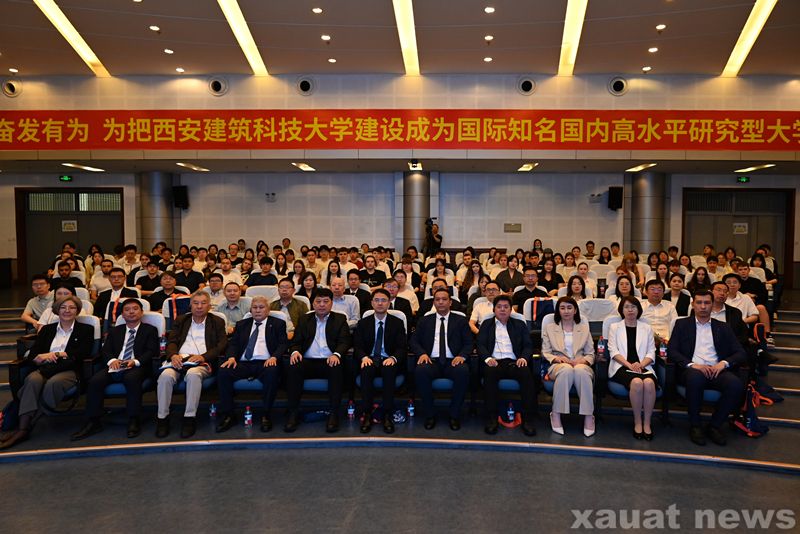
In his address, Chen Rong noted that, as one of China’s leading universities specializing in architecture and the built environment, XAUAT has, over nearly 130 years of development, accumulated strong academic traditions in civil engineering, architecture, and environmental disciplines. The University has educated more than 350,000 graduates, including 16 academicians from China and abroad, and has established an internationally recognized disciplinary cluster centered on building science and technology.
He emphasized that XAUAT remains committed to an open and globally engaged approach to education, maintaining partnerships with more than 100 universities and institutions across over 40 countries and regions. The University also initiated the Silk Road International Alliance of Architectural and Technological Universities, providing a broad platform for international cooperation in education, science, and technology.
Focusing on topics such as Green Building and Environmental Control Technologies, Mining Safety Innovation, and Digital and Intelligent Public Art Communication and Talent Development, the symposium aimed to promote deeper integration of industry, academia, research, and application, while generating new momentum for high-quality urbanization and improved living environments along the Silk Road.
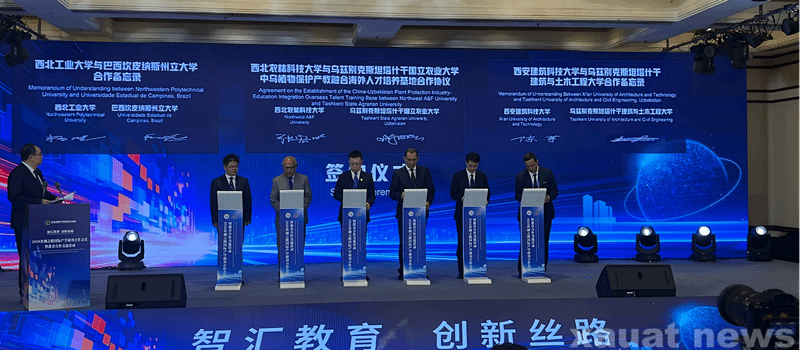
Speaking on behalf of Tashkent University of Architecture and Civil Engineering, Sanjar Mardov highlighted that, amid the deepening local-level cooperation between China and Uzbekistan, the two universities had recently signed both an institutional Memorandum of Understanding and an agreement on the joint development of civil engineering teaching materials. These achievements mark the transition of bilateral cooperation from strategic consensus to substantive implementation.
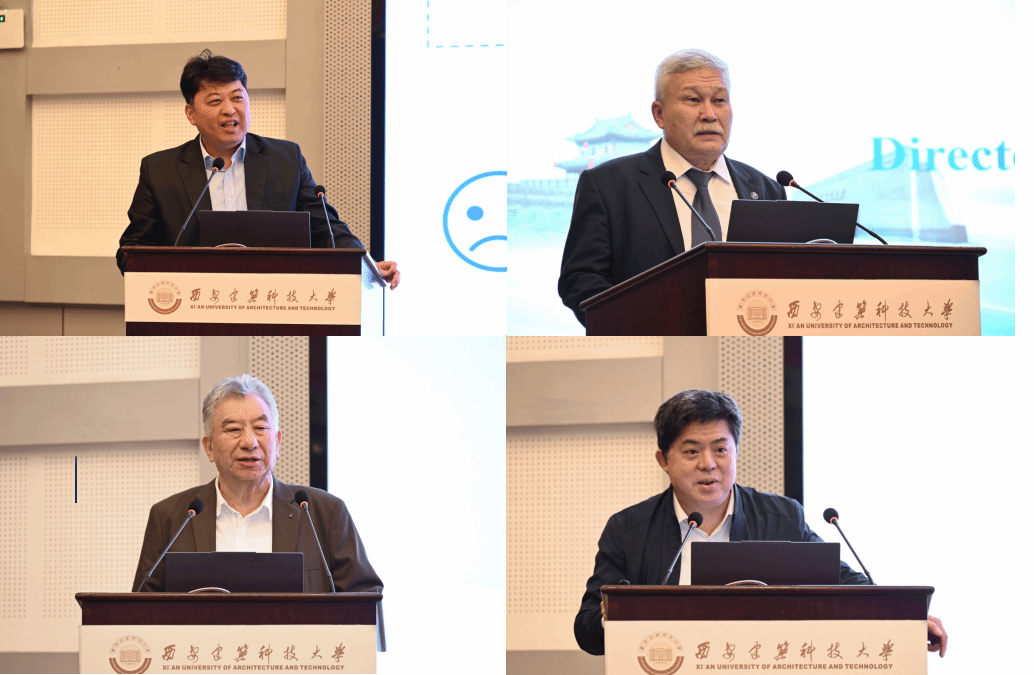
Guided by the principles of green and low-carbon development, the two institutions will advance the integration of engineering education through the development of bilingual teaching resources and faculty exchanges, jointly exploring innovative pathways for sustainable and green building development while providing intellectual support for urban development along the Silk Road.The symposium featured keynote presentations by Professor Huang Haoyong, Academician of the Singapore Academy of Engineering and Fellow of the International Water Association; Professor Arstanbek Abdiev and Professor Tashmuhamed Karimov from Kyrgyz State Technical University; and Professor Qiu Shuntian from Sun Yat-sen University.
As an important component of Shaanxi Silk Road Conference on International Industry–University–Research–Application Cooperation, the symposium has been successfully held for several consecutive years. This year’s event consisted of a main forum and three specialized sub-forums: Energy Conservation, Carbon Reduction, and Resource Recycling Technologies in Mining, Green Building and Environmental Control Technologies in Western China, Talent Development in Digital and Intelligent Urban Public Art. Addressing key industry challenges and emerging trends, these forums promoted discussions on mining safety and green transformation, sustainable urban energy systems and thermal comfort science, as well as innovative approaches to art education and international communication in the digital era, demonstrating the vitality of interdisciplinary collaboration along the Silk Road.
The symposium brought together academicians, experts, and scholars from China, Singapore, the United States, Australia, Kyrgyzstan, Uzbekistan, Italy, Thailand, Slovenia, and other countries and regions. More than 800 faculty members and students from universities and research institutions participated in the event. The conference also showcased XAUAT’s systematic efforts in supporting scientific and technological innovation under the Belt and Road Initiative, bringing together representatives from the University’s Institutes of Area Studies, International Talent Recruitment Bases, Joint Laboratories, High-Level Research Teams, International Science and Technology Cooperation Bases, and related academic units. Through these platforms, the University highlighted its comprehensive framework for advancing international scientific collaboration and innovation.