XAUAT News Network - On October 10, a delegation from the University of Canterbury, led by Associate Professor Tham Piumsomboon, Acting Associate Head of the School of Product Design, visited Xi’an University of Architecture and Technology (XAUAT) for an academic exchange with the College of Art. The meeting was attended by Liu Chao, Vice Dean; Jiang Tao, Executive Dean of the College of Art; Zhang Bin and Liu Fulong, Vice Deans of the College of Art; and faculty representatives from the Industrial Design and Digital Media Art programs. Liu Chao chaired the meeting.
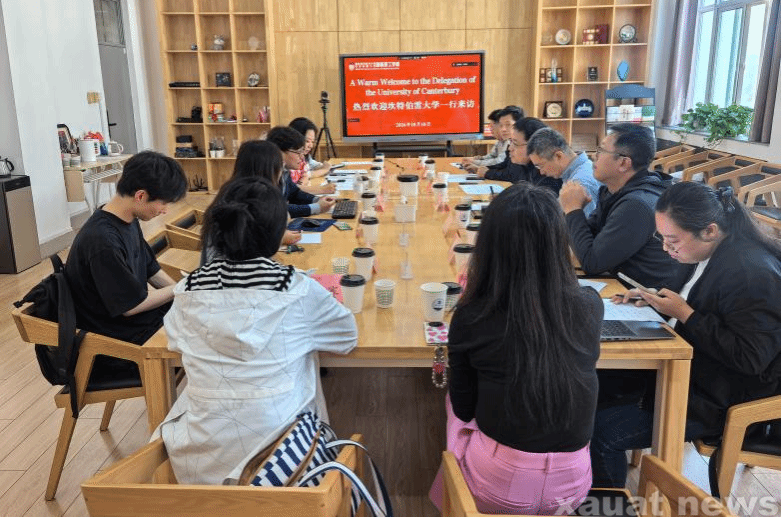
Liu Chao welcomed the delegation and expressed the hope that the visit would help advance the joint master’s program in Industrial Design, explore new areas of cooperation, and deepen collaboration between the two universities.
Tham Piumsomboon spoke highly of the College of Art’s educational foundation and emphasis on practical training, and introduced the School of Product Design at the University of Canterbury. Part of the Faculty of Engineering, the school focuses on the integration of engineering and design and places a strong emphasis on practical learning. It has particular strengths in integrating artificial intelligence with design, interaction design, and industry–academia collaboration in film and media production. Tham also expressed interest in expanding cooperation with XAUAT across a range of areas.
Zhao Feng, Director of the Industrial Design Teaching and Research Section at the College of Art, introduced industry–academia–research initiatives in rehabilitation design, joint research and development with enterprises, and innovative applications of TRIZ theory. He expressed the hope that the two universities would deepen joint research through the master’s program in Industrial Design and work together to produce high-quality teaching and research outcomes.
The two sides held focused discussions on the training model for the master’s program in Industrial Design, exchanging views and reaching consensus on specific matters including credit allocation, joint curriculum development, credit recognition, and visits by University of Canterbury faculty to teach in China. To build a long-term partnership, the two sides also agreed to promote faculty exchanges and explore appointing University of Canterbury experts as adjunct supervisors for master’s and doctoral students at the College of Art. They also discussed expanding student exchange opportunities through short-term study visits, semester exchanges, and integrated bachelor’s-to-master’s pathways, as well as jointly applying for international research projects and establishing inter-university research platforms.
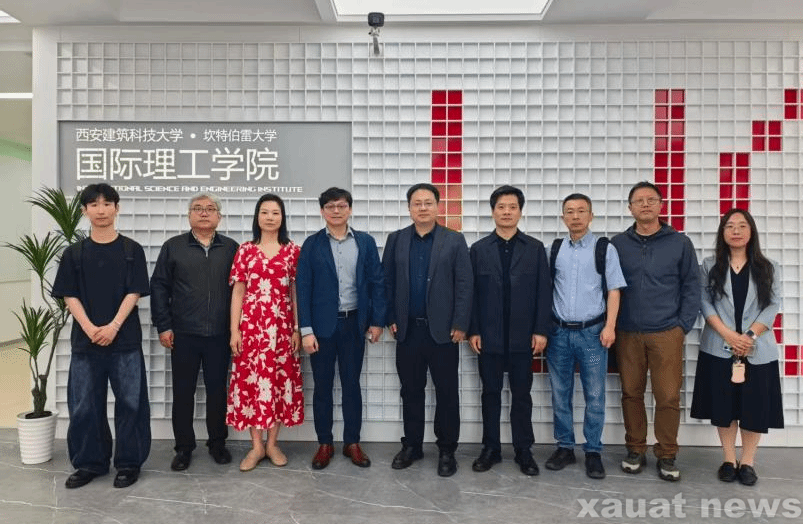
Looking ahead, the College of Art will continue to facilitate cooperation between the two universities by drawing on the University of Canterbury’s expertise, teaching approaches, and cutting-edge research resources. These efforts will support the international development of design-related programs across XAUAT and help build a stable, long-term, and mutually beneficial partnership based on complementary strengths and shared goals.
Before the meeting, the delegation visited teaching facilities, laboratories, and offices at the College of Art on XAUAT’s Caotang Campus.