XAUAT News Network — The 2nd International Conference on Digital Intelligence for Energy Systems (ICDIES 2026) was held at the University of Wollongong in Australia from October 7 to 9. Professor Yin Haiguo of the School of Building Services Science and Engineering received the Outstanding Young Scholar Award. A conference paper co-authored by doctoral student Du Jiamin, who was the first author, and Professor Yin, who was the corresponding author, won the Best Paper Award.
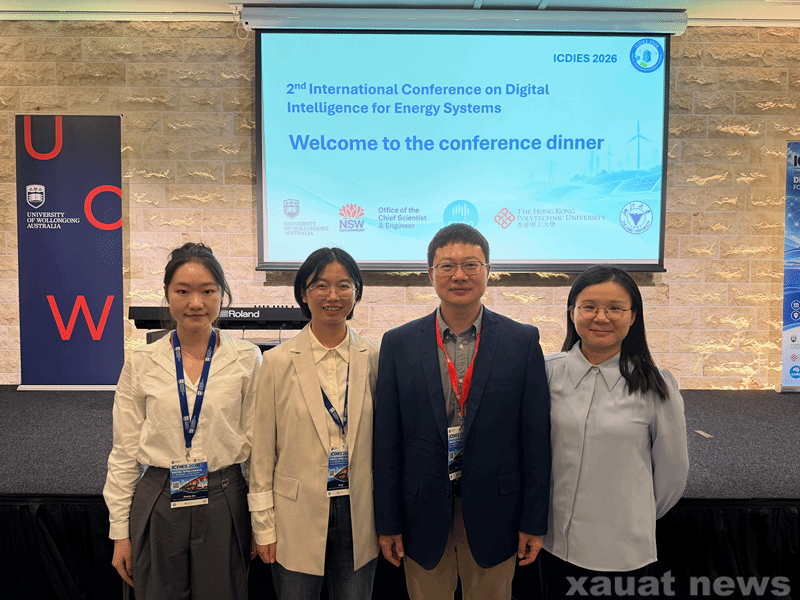
During the conference, Professor Yin and Associate Professor Qi Di chaired parallel sessions and organized academic discussions on topics including building energy design, performance evaluation, energy forecasting, and intelligent fault diagnosis.
Professor Yin delivered a presentation titled “Innovative Ventilation Technologies for Energy-Efficient, Intelligent, and Healthy Built Environments,” outlining research advances in efficient ventilation control for large spaces, indoor air quality regulation in small spaces, and dynamic environmental conditioning in deep underground spaces. Associate Professor Qi shared research approaches to the coupled application of ground-source heat pumps and phase-change thermal energy storage, as well as coordinated system optimization and control, in a presentation titled “GSHP-coupled double-layer PCM radiant floors: Operational optimization and control.” Doctoral student Du Jiamin presented “Multi-objective optimization of the performance of column attachment ventilation in large-space railway stations,” introducing a design approach for column-attached ventilation in large spaces and its potential applications in settings such as railway stations and airport terminals.
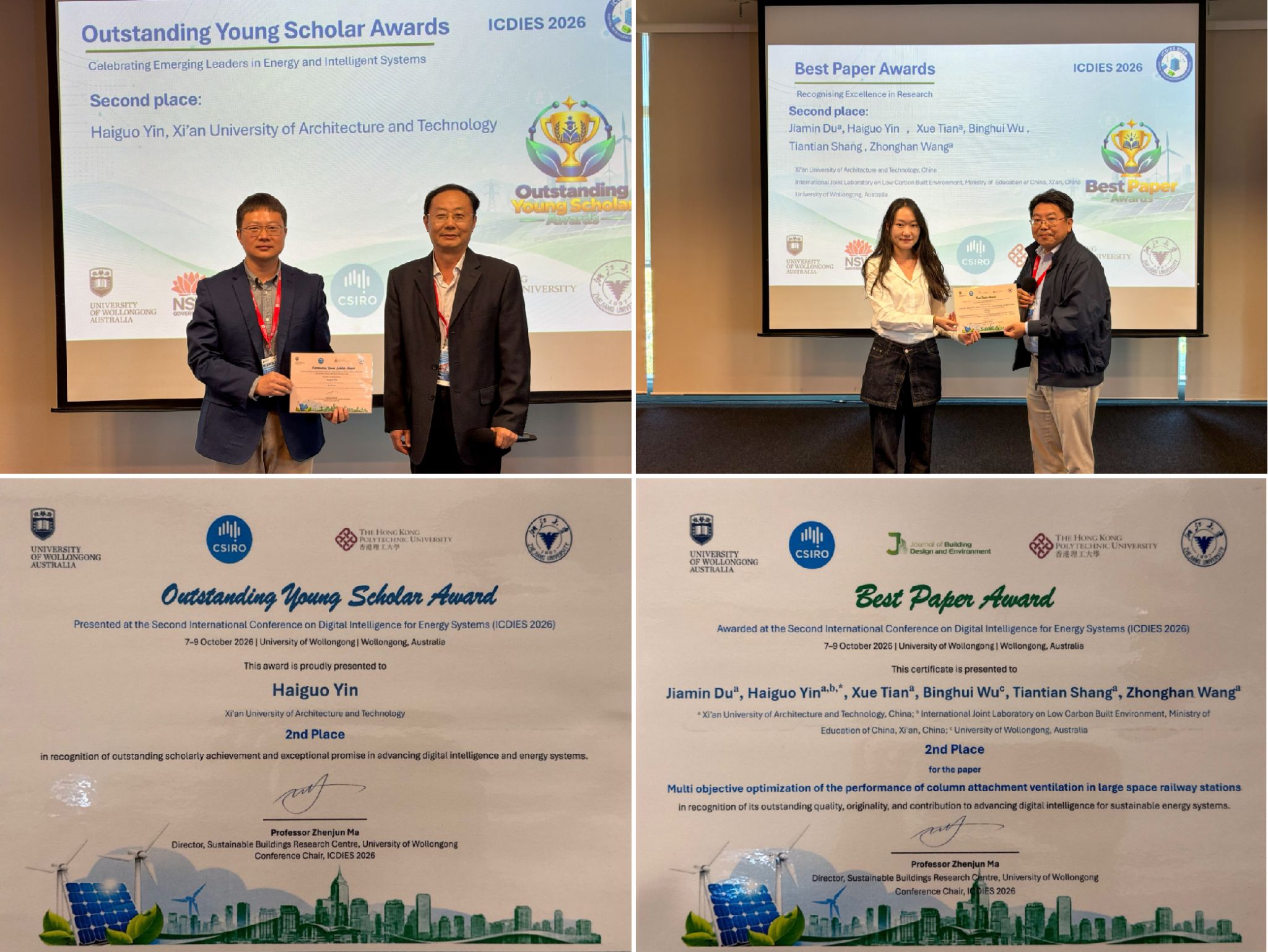
ICDIES serves as an important international academic exchange platform in the field of digital intelligence for energy systems, focusing on emerging areas at the intersection of artificial intelligence, digital technologies, and energy systems. This year's conference brought together experts and scholars from universities, research institutions, and industry worldwide to discuss key technologies in building energy optimization, intelligent energy management, and energy system forecasting and control. The conference provided an important platform for advancing the application of digital intelligence in energy system transformation and fostering international research collaboration and the exchange of innovative research outcomes.